
.orscg-article{–orscg-text:#152033;–orscg-muted:#5c6878;–orscg-line:#e4e8ee;–orscg-accent:#0b6b4f;–orscg-accent2:#c75b12;–orscg-soft:#f6faf7;–orscg-warm:#fff7ef;max-width:1120px;margin:0 auto;color:var(–orscg-text);font-family:inherit;line-height:1.76}.orscg-article *{box-sizing:border-box}.orscg-article-intro{padding:30px 26px;margin:0 0 32px;border:1px solid var(–orscg-line);border-radius:22px;background:linear-gradient(135deg,#fff 0%,var(–orscg-soft) 65%,var(–orscg-warm) 100%)}.orscg-updated{display:inline-block;margin:0 0 14px;padding:6px 12px;border:1px solid rgba(11,107,79,.18);border-radius:999px;background:#fff;color:var(–orscg-accent);font-size:13px;font-weight:800}.orscg-article-intro h2{font-family:’Trebuchet MS’,Arial,sans-serif;margin:0 0 14px;font-size:clamp(30px,4vw,52px);line-height:1.08;color:var(–orscg-text);letter-spacing:-.03em}.orscg-lead{max-width:900px;margin:0 0 18px;font-size:clamp(17px,2vw,21px);color:var(–orscg-muted)}.orscg-contact-mini{font-weight:800;margin:0}.orscg-contact-mini a,.orscg-content a{color:var(–orscg-accent);text-decoration:none}.orscg-contact-mini a:hover,.orscg-content a:hover{text-decoration:underline}.orscg-hero-price{margin:18px 0 0;padding:14px 16px;border:1px solid rgba(199,91,18,.28);border-radius:14px;background:#fff;color:#733809;font-weight:650}.orscg-content{font-size:17px}.orscg-content h2{font-family:’Trebuchet MS’,Arial,sans-serif;margin:44px 0 15px;font-size:clamp(25px,3vw,38px);line-height:1.17;color:var(–orscg-text);letter-spacing:-.02em}.orscg-content h2:first-child{margin-top:0}.orscg-content h3{margin:28px 0 12px;font-size:clamp(20px,2.1vw,27px);line-height:1.25;color:var(–orscg-text)}.orscg-content p{margin:0 0 18px}.orscg-content ul,.orscg-content ol{margin:0 0 24px;padding-left:24px}.orscg-content li{margin:8px 0}.orscg-content table,.orscg-table{width:100%;border-collapse:separate;border-spacing:0;margin:25px 0;font-size:16px;border:1px solid var(–orscg-line);border-radius:0;overflow:hidden;background:#fff;box-shadow:0 10px 24px rgba(15,23,42,.05)}.orscg-content th,.orscg-content td{border:0;border-bottom:1px solid var(–orscg-line);padding:13px 14px;text-align:left;vertical-align:top}.orscg-content tr:last-child td{border-bottom:0}.orscg-content th{background:var(–orscg-soft);font-weight:850;color:#10251d}.orscg-price-box{margin:30px 0;padding:24px;border:0;border-top:3px solid var(–orscg-accent2);border-bottom:1px solid rgba(199,91,18,.28);border-radius:0;background:linear-gradient(135deg,#fff,var(–orscg-warm));box-shadow:0 12px 26px rgba(15,23,42,.06)}.orscg-price-box h2{margin-top:0}.orscg-price-table th{background:#fff1e3}.orscg-price-table td:first-child{font-weight:800;color:#733809}.orscg-anchor-target{display:block;position:relative;top:-115px;visibility:hidden;height:0;overflow:hidden}.orscg-content h2[data-orscg-anchor]{scroll-margin-top:120px}.orscg-toc,.orscg-company-links{margin:24px 0;padding:22px 24px;border:1px solid var(–orscg-line);border-radius:18px;background:#fff;box-shadow:0 10px 28px rgba(15,23,42,.04)}.orscg-toc h2,.orscg-company-links h2{margin-top:0}.orscg-toc ol{columns:2;column-gap:34px}.orscg-toc li{break-inside:avoid}.orscg-toc a{cursor:pointer;font-weight:700}.orscg-note,.orscg-checklist,.orscg-itinerary,.orscg-faq,.orscg-map,.orscg-pro-block{margin:28px 0;padding:22px 24px;border:0;border-top:1px solid var(–orscg-line);border-bottom:1px solid var(–orscg-line);border-left:5px solid var(–orscg-accent);border-radius:0;background:var(–orscg-soft)}.orscg-itinerary{border-left-color:var(–orscg-accent2);background:#fffaf5}.orscg-pro-block{background:linear-gradient(135deg,#fff,var(–orscg-soft));box-shadow:0 10px 28px rgba(15,23,42,.04)}.orscg-top-images{display:grid;grid-template-columns:repeat(auto-fit,minmax(220px,1fr));gap:16px;margin:0 0 30px}.orscg-featured-image{margin:0;aspect-ratio:16/10;overflow:hidden;border-radius:18px;background:#eef2f0}.orscg-featured-image img{display:block;width:100%;height:100%;object-fit:cover;object-position:center;border-radius:18px;box-shadow:0 12px 30px rgba(15,23,42,.10)}.orscg-simple-cta{margin:46px 0 0;padding:28px;border:0;border-top:3px solid var(–orscg-accent);border-bottom:1px solid rgba(11,107,79,.20);border-radius:0;background:linear-gradient(135deg,var(–orscg-soft),#fff);box-shadow:0 14px 30px rgba(15,23,42,.07)}.orscg-direct-answer{margin:0 0 30px;padding:22px 24px;border:0;border-top:1px solid rgba(11,107,79,.25);border-bottom:1px solid rgba(11,107,79,.25);border-left:6px solid var(–orscg-accent);border-radius:0;background:linear-gradient(135deg,#fff,var(–orscg-soft));box-shadow:0 12px 26px rgba(15,23,42,.06);font-size:18px}.orscg-direct-answer p:last-child{margin-bottom:0}.orscg-simple-cta h2{font-family:’Trebuchet MS’,Arial,sans-serif;margin:0 0 12px;font-size:clamp(24px,3vw,34px);line-height:1.2}.orscg-simple-cta p{margin:0 0 16px}.orscg-related-packages{position:relative;margin:48px 0 0;padding:30px 0 8px;border:0;border-top:3px solid var(–orscg-accent);border-bottom:1px solid var(–orscg-line);border-radius:0;background:linear-gradient(180deg,#fff 0%,#f7faf8 100%);box-shadow:none}.orscg-related-packages h2{margin:0 0 8px}.orscg-related-packages p{margin:0;color:var(–orscg-muted)}.orscg-related-heading{display:flex;align-items:flex-end;justify-content:space-between;gap:18px;margin-bottom:22px}.orscg-package-explorer{display:grid;grid-template-columns:minmax(220px,270px) minmax(0,1fr);gap:24px;align-items:start}.orscg-package-filters{position:sticky;top:92px;border:1px solid var(–orscg-line);border-top:4px solid var(–orscg-accent);border-radius:0;background:#fff;box-shadow:0 12px 28px rgba(15,23,42,.07)}.orscg-filter-mobile-toggle{display:none;width:100%;padding:14px 16px;border:0;border-bottom:1px solid var(–orscg-line);border-radius:0;background:#fff;color:var(–orscg-text);font:inherit;font-weight:850;text-align:left;cursor:pointer}.orscg-filter-panel-head{display:flex;align-items:center;justify-content:space-between;gap:12px;padding:16px 17px;border-bottom:1px solid var(–orscg-line)}.orscg-filter-panel-head strong{font-size:18px}.orscg-filter-panel-head button,.orscg-package-results-head button{padding:0;border:0;background:transparent;color:var(–orscg-accent);font:inherit;font-size:13px;font-weight:800;cursor:pointer}.orscg-filter-group{margin:0;padding:16px 17px;border:0;border-bottom:1px solid var(–orscg-line)}.orscg-filter-group:last-child{border-bottom:0}.orscg-filter-group legend{display:block;width:100%;margin:0 0 10px;padding:0;color:var(–orscg-text);font-size:15px;font-weight:900}.orscg-filter-group label{display:grid;grid-template-columns:18px minmax(0,1fr) auto;align-items:center;gap:9px;margin:9px 0;color:var(–orscg-text);font-size:14px;line-height:1.35;cursor:pointer}.orscg-filter-group input{width:16px;height:16px;margin:0;accent-color:var(–orscg-accent)}.orscg-filter-group b{min-width:24px;color:var(–orscg-muted);font-size:12px;font-weight:700;text-align:right}.orscg-package-results{min-width:0}.orscg-package-results-head{display:flex;align-items:center;justify-content:space-between;gap:14px;margin:0 0 12px;padding:12px 0;border-top:1px solid var(–orscg-line);border-bottom:1px solid var(–orscg-line)}.orscg-package-results-head strong{font-size:15px}.orscg-package-list{display:grid;gap:16px}.orscg-package-card{display:grid;grid-template-columns:minmax(190px,245px) minmax(0,1fr);min-width:0;overflow:hidden;border:1px solid var(–orscg-line);border-left:4px solid var(–orscg-accent);border-radius:0;background:#fff;color:var(–orscg-text);box-shadow:0 12px 26px rgba(15,23,42,.07);transition:transform .18s ease,box-shadow .18s ease}.orscg-package-card[hidden]{display:none!important}.orscg-package-card:hover{transform:translateY(-2px);box-shadow:0 17px 32px rgba(15,23,42,.11)}.orscg-package-card-image{display:block;min-height:185px;overflow:hidden;background:#eaf0ec;text-decoration:none!important}.orscg-package-card-image img{display:block;width:100%;height:100%;min-height:185px;object-fit:cover;object-position:center}.orscg-package-image-placeholder{display:block;width:100%;height:100%;min-height:185px;background:linear-gradient(135deg,#e8f1ec,#fff3e7)}.orscg-package-card-body{display:flex;min-width:0;flex-direction:column;padding:18px 20px}.orscg-package-meta{display:flex;flex-wrap:wrap;gap:7px;margin:0 0 10px}.orscg-package-meta span{display:inline-flex;padding:4px 8px;border:1px solid rgba(11,107,79,.18);border-radius:0;background:var(–orscg-soft);color:#21463b;font-size:12px;font-weight:800;line-height:1.2}.orscg-package-card h3{margin:0 0 8px!important;font-size:clamp(19px,2vw,25px)!important;line-height:1.25}.orscg-package-card h3 a{color:var(–orscg-text)!important;text-decoration:none!important}.orscg-package-card h3 a:hover{color:var(–orscg-accent)!important}.orscg-package-card .orscg-package-summary{margin:0 0 14px;color:var(–orscg-muted);font-size:14px;line-height:1.58}.orscg-package-view{display:inline-flex;align-items:center;gap:7px;margin-top:auto;color:var(–orscg-accent)!important;text-decoration:none!important;font-size:14px;font-weight:900}.orscg-package-view:hover{text-decoration:underline!important}.orscg-package-empty{padding:24px;border:1px dashed var(–orscg-line);background:#fff;text-align:center}.orscg-filter-panel.is-open{display:block}.orscg-cta-links{display:flex;flex-wrap:wrap;gap:12px}.orscg-btn{display:inline-flex;align-items:center;justify-content:center;padding:12px 19px;border-radius:0;background:var(–orscg-accent);color:#fff!important;text-decoration:none!important;font-weight:850;box-shadow:4px 4px 0 rgba(11,107,79,.18)}.orscg-btn-light{background:#fff;color:var(–orscg-accent)!important;border:1px solid var(–orscg-accent);box-shadow:none}@media(max-width:980px){.orscg-package-explorer{grid-template-columns:220px minmax(0,1fr)}.orscg-package-card{grid-template-columns:190px minmax(0,1fr)}}@media(max-width:760px){.orscg-article-intro{padding:24px 18px}.orscg-toc ol{columns:1}.orscg-content{font-size:16px}.orscg-content table,.orscg-table{display:block;overflow-x:auto}.orscg-simple-cta,.orscg-price-box,.orscg-related-packages{padding:20px}.orscg-cta-links{display:block}.orscg-btn{margin:0 8px 8px 0}.orscg-top-images{grid-template-columns:1fr}.orscg-related-heading{align-items:flex-start}.orscg-package-explorer{grid-template-columns:1fr}.orscg-package-filters{position:static}.orscg-filter-mobile-toggle{display:block}.orscg-filter-panel{display:none}.orscg-filter-panel.is-open{display:block}.orscg-package-card{grid-template-columns:1fr}.orscg-package-card-image,.orscg-package-card-image img,.orscg-package-image-placeholder{min-height:210px}.orscg-package-results-head{align-items:flex-start}}
/* v3.17.24 related package explorer: stronger existing-page topic matching, three-column desktop grid and old-page live refresh */
.orscg-related-packages{padding:34px 0 12px;overflow:visible}.orscg-related-heading{align-items:flex-start;margin-bottom:26px}.orscg-related-heading>div{max-width:880px}.orscg-related-heading h2{font-size:clamp(27px,3vw,40px);line-height:1.14}.orscg-related-heading p{max-width:830px;line-height:1.65}.orscg-package-explorer{grid-template-columns:minmax(238px,270px) minmax(0,1fr);gap:28px}.orscg-package-filters{top:84px;max-height:calc(100vh – 104px);overflow:auto;scrollbar-width:thin}.orscg-filter-mobile-toggle{align-items:center;justify-content:space-between;gap:16px}.orscg-filter-mobile-toggle small{color:var(–orscg-muted);font-size:12px;font-weight:750}.orscg-filter-panel-head{align-items:flex-start;padding:18px}.orscg-filter-panel-head>div{display:grid;gap:3px}.orscg-filter-panel-head span{color:var(–orscg-muted);font-size:12px}.orscg-filter-group{padding:0}.orscg-filter-group legend{margin:0}.orscg-filter-group-toggle{display:flex;width:100%;align-items:center;justify-content:space-between;gap:14px;padding:14px 17px;border:0;background:#fff;color:var(–orscg-text);font:inherit;font-size:15px;font-weight:900;text-align:left;cursor:pointer}.orscg-filter-group-toggle i{position:relative;width:14px;height:14px;flex:0 0 14px}.orscg-filter-group-toggle i:before,.orscg-filter-group-toggle i:after{content:””;position:absolute;left:1px;top:6px;width:12px;height:2px;background:var(–orscg-accent);transition:transform .18s ease}.orscg-filter-group-toggle i:after{transform:rotate(90deg)}.orscg-filter-group.is-expanded .orscg-filter-group-toggle i:after{transform:rotate(0)}.orscg-filter-options{padding:0 17px 14px}.orscg-filter-group:not(.is-expanded) .orscg-filter-options{display:none}.orscg-filter-group label{margin:5px -7px;padding:8px 7px;transition:background .16s ease}.orscg-filter-group label:hover{background:var(–orscg-soft)}.orscg-filter-group label:has(input:checked){background:#eef8f3;color:#123b2f;font-weight:800}.orscg-package-results-head{align-items:flex-start;margin-bottom:18px;padding:14px 0}.orscg-package-results-head>div{min-width:0}.orscg-package-results-head>button{flex:0 0 auto;margin-top:2px}.orscg-active-filters{display:flex;flex-wrap:wrap;gap:6px;margin-top:8px}.orscg-active-filters:empty{display:none}.orscg-active-filter-chip{display:inline-flex;align-items:center;padding:4px 8px;border:1px solid rgba(11,107,79,.18);background:var(–orscg-soft);color:#21463b;font-size:12px;font-weight:750}.orscg-package-list{grid-template-columns:repeat(3,minmax(0,1fr));gap:20px;align-items:stretch}.orscg-package-card{position:relative;display:grid;grid-template-columns:1fr;grid-template-rows:auto 1fr;height:100%;border-left:1px solid var(–orscg-line);border-top:4px solid var(–orscg-accent);cursor:pointer;outline:none}.orscg-package-card:focus-visible{box-shadow:0 0 0 3px rgba(11,107,79,.2),0 17px 32px rgba(15,23,42,.11)}.orscg-package-card-image{min-height:0;aspect-ratio:16/9}.orscg-package-card-image img,.orscg-package-image-placeholder{width:100%;height:100%;min-height:0;aspect-ratio:16/9}.orscg-package-card-body{height:100%;padding:18px 19px 19px}.orscg-package-card h3{font-size:clamp(18px,1.7vw,23px)!important}.orscg-package-summary{display:-webkit-box;overflow:hidden;-webkit-box-orient:vertical;-webkit-line-clamp:3}.orscg-package-view{padding-top:4px}.orscg-package-card.is-filtered-in{animation:orscgPackageReveal .22s ease both}@keyframes orscgPackageReveal{from{opacity:.35;transform:translateY(5px)}to{opacity:1;transform:none}}@media(max-width:1050px){.orscg-package-explorer{grid-template-columns:220px minmax(0,1fr);gap:20px}.orscg-package-list{grid-template-columns:repeat(2,minmax(0,1fr))}}@media(max-width:760px){.orscg-related-packages{padding:24px 0 8px}.orscg-package-explorer{grid-template-columns:1fr}.orscg-package-filters{max-height:none;overflow:visible}.orscg-filter-mobile-toggle{display:flex}.orscg-package-list{grid-template-columns:1fr;gap:16px}.orscg-package-card-image{aspect-ratio:16/10}.orscg-package-card-image img,.orscg-package-image-placeholder{aspect-ratio:16/10}.orscg-package-results-head{gap:10px}.orscg-package-results-head>button{white-space:nowrap}}@media(max-width:430px){.orscg-package-results-head{display:grid;grid-template-columns:1fr}.orscg-package-results-head>button{justify-self:start}.orscg-filter-mobile-toggle{padding:14px}.orscg-package-card-body{padding:16px}}
Traveling from Zimbabwe to South Africa in 2026-2027 involves choosing between several transport methods, primarily by road (private vehicle, bus, or shared taxi), or by air. The most common and cost-effective route is overland via Beitbridge Border Post, connecting Harare or Bulawayo to Johannesburg. Flying offers speed but at a higher cost, with direct flights usually available from Harare and Victoria Falls to Johannesburg and Cape Town. Planning involves considering visa requirements, vehicle documentation if driving, currency exchange, and the best time to travel to avoid peak periods.
Understanding Your Journey: Zimbabwe to South Africa Travel in 2026-2027
The journey from Zimbabwe to South Africa is a popular corridor for business, tourism, and family visits. As you plan your trip for 2026 or 2027, understanding the nuances of each travel option is crucial for a smooth and enjoyable experience. This guide provides an in-depth look at how to travel from Zimbabwe to South Africa, covering everything from the most direct flight paths to the adventurous overland routes, including essential details for border crossings, potential costs, and practical advice.
Whether you are a tourist eager to explore South Africa’s diverse landscapes, a business traveler on a tight schedule, or a resident visiting family, this information aims to equip you with the knowledge needed to make informed decisions. We will break down the pros and cons of each travel method, helping you choose the one that best suits your budget, time constraints, and personal preferences for your 2026-2027 travels.
Option 1: Overland Travel – The Road Less Traveled (and Most Popular)
For many, the overland journey from Zimbabwe to South Africa is the most common and often the most economical way to travel. This typically involves navigating the busy Beitbridge Border Post, which connects the Zimbabwean city of Messina (now Musina) in South Africa. The primary departure points in Zimbabwe are usually Harare, the capital, and Bulawayo, the second-largest city.
Route 1.1: Harare to Johannesburg by Road
This is arguably the most frequently used overland route. The distance is approximately 950 kilometers (590 miles) and can take anywhere from 10 to 15 hours of driving time, not including border crossing delays. The journey typically follows the A1 highway south from Harare towards Masvingo, then connects to the A4 towards Beitbridge.
Driving Your Own Vehicle: Documentation and Considerations
If you plan to drive your own vehicle from Zimbabwe to South Africa, thorough preparation is essential. Ensure all your vehicle’s documentation is in order:
- Vehicle Registration Documents: You will need the original registration papers.
- Proof of Ownership/Authorization Letter: If you are not the owner, a letter from the owner authorizing you to drive the vehicle is required.
- Vehicle License/Permit: Ensure your vehicle license is up to date.
- South African Roadworthy Certificate: While not always strictly enforced for temporary cross-border travel, it’s good practice to ensure your vehicle is roadworthy.
- International Driving Permit (IDP): Recommended, though a valid Zimbabwean license is usually accepted.
- Vehicle Insurance: Ensure your insurance covers cross-border travel into South Africa. You might need to purchase additional cover at the border.
- Temporary Import Permit (TIP): For non-South African registered vehicles, a TIP is required, which can be obtained at the border.
- Police Clearance Certificate: Sometimes required, especially if the vehicle is financed or leased.
Costs associated with driving your own vehicle include:
- Fuel: Prices can vary significantly between Zimbabwe and South Africa. It is generally cheaper in South Africa.
- Road Tolls: Both countries have toll gates. Budget around $20-$40 USD for tolls depending on your vehicle type and the exact route.
- Border Fees: Expect fees for vehicle permits, road taxes, and potentially insurance at the border. These can add up to $50-$100 USD or more.
- Vehicle Insurance: Additional cross-border insurance might be necessary, costing around $30-$70 USD for a short period.
Safety Tips for Driving:
- Daylight Travel: It is highly recommended to travel during daylight hours only, especially when crossing borders. Avoid driving at night due to potential road hazards and security concerns.
- Vehicle Security: Be vigilant about your vehicle at all times, especially in parking areas or at rest stops.
- Pace Yourself: The journey is long. Plan for rest stops.
- Check Road Conditions: Roads in Zimbabwe can be in varying conditions. Be prepared for potholes, especially away from major highways.
Bus Services: The Most Common Public Transport
Numerous bus companies operate between Harare and Johannesburg, offering a more affordable and less stressful alternative to driving yourself. Popular operators include:
- Intercape: A well-regarded long-distance bus service known for its comfort and reliability.
- Greyhound: Another major player offering routes across Southern Africa.
- Eldorado: A local operator often used for this route.
- Shamwari Express: Frequently mentioned for this specific cross-border journey.
Booking Bus Tickets:
- Online Booking: Most major operators allow online booking through their websites or third-party platforms. It is advisable to book in advance, especially for travel during peak seasons in 2026-2027.
- Travel Agents: Local travel agents in Harare and Bulawayo can assist with booking.
- Bus Terminals: Tickets can also be purchased directly at the main bus terminals.
Bus Journey Details:
- Duration: Typically 12-16 hours, depending on the operator, route, and border crossing times.
- Comfort: Most long-distance buses are equipped with reclining seats, air conditioning, and onboard entertainment. Some offer onboard toilets.
- Stops: Buses usually make scheduled stops for meals and restroom breaks.
- Luggage Allowance: Check with the specific bus company for their luggage policy. Typically, a reasonable amount of checked and hand luggage is permitted.
Cost of Bus Travel:
Bus tickets from Harare to Johannesburg generally range from $30 to $60 USD per person, one way. Prices can fluctuate based on the operator, demand, and time of booking. Booking well in advance for 2026-2027 travel is recommended.
Shared Taxis (Mushikashika)
Shared taxis, often referred to as ‘mushikashika’ in Zimbabwe, are a common mode of transport for shorter distances and can also be used for cross-border trips. They are generally faster than buses but less comfortable and can be riskier.
- Availability: These are typically found at designated taxi ranks in cities like Harare and Bulawayo.
- Process: Passengers often wait until the vehicle is full before departing.
- Cost: Usually slightly more expensive than buses, but cheaper than a private taxi. Expect costs in the range of $40-$70 USD per person.
- Risks: Vehicle condition can be variable, and they may not adhere to strict safety regulations. Driving styles can also be aggressive.
Route 1.2: Bulawayo to Johannesburg by Road
This route is slightly shorter than the one from Harare, covering approximately 700 kilometers (435 miles). The journey typically takes 8-12 hours, including border crossing. The route from Bulawayo heads south towards the Plumtree Border Post (connecting to Botswana) or, more commonly for South Africa, heads east towards Beitbridge. Some services might go via Botswana (e.g., Francistown in Botswana) and then into South Africa, which adds complexity but can be an option if you wish to visit Botswana briefly.
However, the most direct overland route from Bulawayo to Johannesburg generally involves heading towards Beitbridge. This route shares much of the same infrastructure and border crossing procedures as the Harare-Johannesburg route.
Bus and Shared Taxi Options from Bulawayo
Similar to Harare, Bulawayo has bus operators and shared taxi services connecting to Johannesburg. The same companies (Intercape, Greyhound) often have services originating or passing through Bulawayo. Shared taxis are also readily available.
Cost from Bulawayo: Bus fares are usually slightly lower than from Harare, perhaps in the range of $25-$50 USD. Shared taxis would be similarly priced relative to the distance.
Navigating the Beitbridge Border Post
Beitbridge is one of the busiest inland ports of entry in Southern Africa. Expect significant queues, especially during peak travel times (holidays, long weekends). Preparation is key:
- Required Documents:
- For Zimbabweans: Valid Zimbabwean Passport and National ID. If driving, vehicle documents as listed above.
- For South Africans: Valid South African Passport or ID Book.
- For Foreign Nationals: Valid Passport with sufficient remaining validity and relevant South African visa if required.
- Children: Unabridged birth certificates are mandatory for minors traveling into or out of South Africa, along with parental consent letters if not traveling with both parents.
- COVID-19 Regulations (Check Closer to Travel): While most restrictions have been lifted, it’s wise to check the latest requirements for vaccinations or tests closer to your 2026-2027 travel dates.
Process at the Border:
- Immigration (Zimbabwean Side): Exit control stamp for Zimbabwe.
- Customs (Zimbabwean Side): Declare any goods if necessary.
- Road Block/Toll (Zimbabwean Side): Small fees may apply.
- Vehicle Inspection/Registration: For those driving, proceed to the relevant offices for vehicle clearance and payment of fees.
- Immigration (South African Side): Entry control for South Africa. Ensure you have the correct visa if needed.
- Customs (South African Side): Declare goods.
Tips for Beitbridge:
- Time of Day: Aim to arrive as early as possible, ideally just after dawn, to avoid the worst queues.
- Patience: Be prepared for long waits. Pack snacks, water, and entertainment.
- Official Personnel: Only deal with uniformed officials. Beware of touts offering assistance; they may be unofficial and charge exorbitant fees or engage in scams.
- Currency: Have some South African Rand (ZAR) for immediate expenses like food or small purchases at the border.
Option 2: Air Travel – Speed and Convenience
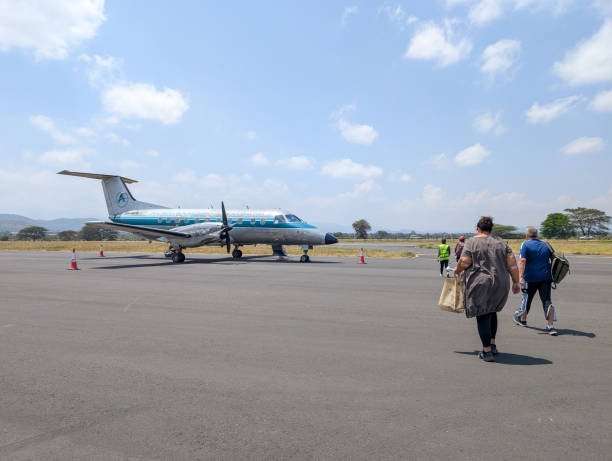
For those prioritizing speed and comfort, flying is the most efficient way to travel from Zimbabwe to South Africa. Direct flights are available from Zimbabwe’s main international airports to major South African hubs.
2.1: Flights from Harare (HRE) to Johannesburg (JNB)
Harare International Airport (Robert Gabriel Mugabe International Airport) offers the most frequent flight connections to South Africa. Johannesburg is the primary gateway.
- Airlines: Air Zimbabwe, South African Airways, and sometimes other regional carriers operate this route.
- Flight Duration: Approximately 1 hour 30 minutes to 2 hours.
- Frequency: Multiple flights daily, especially during peak travel seasons in 2026-2027.
- Cost: Economy class tickets can range from $150 to $400 USD or more, depending on the airline, how far in advance you book, and the season. Business class will be significantly higher.
- Booking: Book through airline websites, online travel agencies (OTAs) like Skyscanner, Expedia, or local Zimbabwean travel agents. Early booking for 2026-2027 is highly recommended for better prices.
2.2: Flights from Victoria Falls (VFA) to South Africa
Victoria Falls Airport is another option, particularly convenient if your starting point is closer to the Falls or if you plan to combine your trip with a visit to the Victoria Falls itself.
- Destinations: Direct flights are often available to Johannesburg (JNB) and sometimes Cape Town (CPT).
- Airlines: Typically operated by Airlink or similar regional carriers.
- Flight Duration: Around 1 hour 30 minutes to Johannesburg; longer to Cape Town.
- Frequency: Less frequent than from Harare, so booking in advance is crucial for 2026-2027.
- Cost: Can be comparable to or slightly higher than flights from Harare, given the smaller airport and potentially fewer options. Expect prices from $180 to $450 USD.
2.3: Flights from Bulawayo (BUQ) to South Africa
Joshua Mqabuko Nkomo International Airport (BUQ) also offers international flights, though usually with fewer options than Harare.
- Destinations: Primarily Johannesburg (JNB).
- Airlines: Limited options, possibly Air Zimbabwe or Airlink.
- Frequency and Cost: Generally lower frequency and potentially higher costs compared to Harare.
2.4: Flights to Cape Town (CPT)
While Johannesburg is the most common entry point, direct flights to Cape Town are also available, particularly from Harare and sometimes Victoria Falls. This is ideal if Cape Town is your final destination or you wish to explore the Western Cape immediately.
- Flight Duration: Approximately 3 hours 30 minutes to 4 hours from Harare.
- Cost: Often more expensive than flights to Johannesburg due to the longer distance. Expect prices from $250 to $600 USD.
Airport Transfers in South Africa
Once you land in South Africa (JNB, CPT, etc.), you will need transport to your final destination. Options include:
- Airport Shuttles: Pre-booked shuttles offer convenience.
- Taxis/Ride-Sharing: Services like Uber and Bolt are widely available and often more affordable than traditional taxis.
- Car Rental: Numerous car rental companies operate at major South African airports if you plan to drive yourself within South Africa.
Option 3: Train Travel – A Scenic but Slow Alternative
Train travel between Zimbabwe and South Africa exists but is significantly less common and much slower than other options. The main route historically connected Bulawayo to Johannesburg.
- Operator: Historically, Zimbabwe Railways and Transnet Freight Rail (South Africa) operated passenger services. However, services can be infrequent and subject to disruption.
- Route: Typically from Bulawayo, passing through Botswana (Francistown), and then entering South Africa towards Pretoria and Johannesburg.
- Duration: This is a very slow journey, often taking 24-48 hours or even longer, with potential delays at border crossings and for operational reasons.
- Comfort: Varies greatly. Sleeper compartments might be available, offering a more comfortable experience than sitting for days.
- Cost: Can be competitive with bus fares if available, but the time investment is substantial.
- Availability: It is crucial to check the current operational status and schedule of these services well in advance of your 2026-2027 travel plans, as they are not always guaranteed.
Recommendation: Due to its unreliability and extreme slowness, train travel is generally not recommended for most travelers planning a trip from Zimbabwe to South Africa in 2026-2027, unless you have a specific interest in this mode of travel and ample time.
Visa Requirements for South Africa
Visa requirements depend on your nationality. South Africa has different visa policies for citizens of various countries.
- Zimbabwean Citizens: Generally, Zimbabwean citizens do not require a visa to enter South Africa for short stays (tourism, business visits). However, they must possess a valid passport with sufficient remaining validity (usually at least 30 days after intended departure) and at least two blank pages.
- Other SADC Nationals: Citizens of most Southern African Development Community (SADC) countries are also exempt from visa requirements for short stays.
- Other Nationalities: Citizens of many other countries (e.g., USA, UK, EU, Australia, Canada) are also granted visa-free entry for stays typically up to 90 days. Always verify the specific list of visa-exempt countries on the official South African Department of Home Affairs website.
- Visa Overstays: Strict penalties apply for overstaying your visa-free period or visa duration. This can result in entry bans for Zimbabwe and potentially other Southern African countries.
- Work/Study Visas: If you intend to work or study in South Africa, you must apply for the appropriate visa before traveling.
Important Note for 2026-2027: Always check the latest visa regulations with the South African High Commission or Consulate in Zimbabwe or your country of residence before your trip. Immigration policies can change.
Currency and Payments
The currency in Zimbabwe is the Zimbabwean Dollar (ZWL), though the US Dollar (USD) is widely used and often preferred for larger transactions. In South Africa, the currency is the South African Rand (ZAR).
- Currency Exchange: You will need to exchange your ZWL/USD for ZAR when entering South Africa. Exchange bureaus are available at airports and major border posts, but rates can be better in South Africa.
- ATMs: ATMs are widely available in South Africa and dispense ZAR. Inform your bank about your travel plans.
- Credit/Debit Cards: Major credit and debit cards (Visa, Mastercard) are accepted in most establishments in South Africa. Ensure your cards are enabled for international transactions.
- Mobile Money: While prevalent in Zimbabwe, mobile money services might not be directly compatible for payments in South Africa.
Budgeting for Your Trip:
Costs can vary significantly. As a rough estimate for 2026-2027:
- Bus Travel: $30 – $60 USD one way.
- Flight Travel: $150 – $600 USD one way, depending on destination and booking time.
- Personal Vehicle Costs: Fuel, tolls, and border fees could add up to $100 – $200 USD or more for a one-way trip, excluding potential maintenance.
- Accommodation & Daily Expenses: Budget separately for your stay in South Africa.
Best Time to Travel: 2026-2027 Considerations
The best time to travel from Zimbabwe to South Africa depends on your preferences and the specific part of South Africa you are visiting.
- Dry Season (May to October): This is generally the most pleasant time for tourism in South Africa, with cooler temperatures and less rainfall, especially in the interior and the Kruger National Park area. It’s also peak tourist season, meaning higher prices and more crowds. Travel during this period for 2026-2027 might require earlier booking.
- Wet Season (November to April): Warmer temperatures, higher humidity, and occasional rainfall. This is the low season for tourism in many parts of South Africa, offering potentially lower prices. However, it can be very hot in certain regions. It’s also the rainy season in Zimbabwe, which might affect road conditions.
- Shoulder Seasons (April-May and September-October): Often offer a good balance of pleasant weather and fewer crowds, making them ideal for travel in 2026-2027.
- Peak Travel Times: Avoid traveling during major South African holidays (Christmas, Easter) and school holidays if you wish to avoid the busiest border crossings and highest prices.
Safety and Health Precautions
Prioritize your safety and health when traveling between Zimbabwe and South Africa.
- Health: Consult your doctor regarding necessary vaccinations or malaria precautions, especially if traveling to certain regions of South Africa (like Kruger National Park). Ensure you have adequate travel insurance that covers medical emergencies.
- Road Safety: As mentioned, exercise extreme caution when driving. Be aware of speed limits, road conditions, and potential hazards. Avoid traveling at night.
- Personal Security: Be mindful of your surroundings, especially in crowded areas like border posts and city centers. Keep valuables secure and avoid displaying expensive items.
- Scams: Be wary of unsolicited offers of help at border posts or on the road. Stick to official channels.
Combining with Other Destinations
Your journey from Zimbabwe to South Africa can be part of a larger Southern African adventure. Consider these combinations:
- Botswana: Overland travelers can easily route through Botswana, visiting places like Chobe National Park or the Okavango Delta before entering South Africa. This typically involves using the Plumtree/Francistown border post.
- Zambia: If starting from the Victoria Falls area in Zimbabwe, you can easily cross into Zambia to experience the Zambian side of the Falls or explore further north.
When planning such multi-country trips for 2026-2027, ensure your visa arrangements and vehicle permits (if applicable) cover all countries you intend to visit.
Planning Your 2026-2027 Trip: A Checklist
Pre-Trip Checklist for Travel from Zimbabwe to South Africa
- Passport Validity: Ensure your passport is valid for at least 6 months beyond your intended stay and has sufficient blank pages.
- Visas: Confirm visa requirements based on your nationality for South Africa. Apply well in advance if needed.
- Vehicle Documents (if driving): Gather all required registration, insurance, and permit documents.
- Flight/Bus Tickets: Book in advance, especially for travel during peak seasons in 2026-2027.
- Travel Insurance: Purchase comprehensive travel insurance.
- Currency: Obtain some South African Rand (ZAR) for immediate expenses.
- Health Preparations: Consult your doctor about necessary vaccinations and malaria prophylaxis.
- Emergency Contacts: Save contact details for your embassy, travel providers, and local emergency services in South Africa.
- Route Planning: Familiarize yourself with the chosen route and potential rest stops.
- Luggage: Check airline or bus company baggage allowances.
Conclusion: Your Smooth Transition to South Africa
Traveling from Zimbabwe to South Africa in 2026-2027 is a well-trodden path with multiple viable options. Whether you choose the adventure of an overland journey by bus or private vehicle, or the speed and convenience of flying, careful planning is key. Understanding the documentation required, the costs involved, the best times to travel, and potential safety considerations will ensure your transition is as smooth as possible. For those seeking reliable and expertly organized travel experiences within Southern Africa, including assistance with cross-border logistics and tailored itineraries, consider reaching out to experienced tour operators. For personalized travel advice and booking assistance, you can contact Top Guide Adventures via WhatsApp at +255616946642 or email at topguideadventures@gmail.com or info@topguideadventurestanzania.com.
Check Availability for How To Travel From Zimbabwe To South Africa In : The Complete Guide…
Ready to compare dates, prices, and the best option for your group? Send the package name and travel month so the team can reply with a clear quote, availability, and what is included.
How To Travel From South Africa To Zimbabwe: Your Complete Guide 2026-2027
Planning a journey from South Africa to Zimbabwe involves choosing the right transport, understanding border crossings, and preparing for your adventure. This comprehensive guide covers all...
View package detailsNo related package matches those filters. Clear one or more filters to see the other topic-matched options.



