
A budget Tanzania safari in 2026-2027 generally costs between $200 and $350 per person per day. This range accounts for essential inclusions like park entrance fees, accommodation in mid-range or budget lodges/camps, meals, and ground transportation with a guide. The final cost depends significantly on the safari’s duration, the specific parks visited (Serengeti and Ngorongoro are pricier), the chosen accommodation style, and whether you opt for a shared group tour or a private safari.
Understanding the “Budget” in a Tanzania Safari Context
When we talk about a “budget” Tanzania safari, we’re not referring to the absolute cheapest option possible, which might compromise safety or the quality of the experience. Instead, a budget safari with Top Guide Adventures focuses on providing excellent value, ensuring you see incredible wildlife and enjoy comfortable, clean accommodation without the luxury price tag. It’s about smart planning, choosing the right itinerary, and understanding where your money goes. For 2026 and 2027 adventures, this means maximizing your wildlife viewing opportunities while managing costs effectively.
The core elements of any Tanzania safari remain consistent: the vast landscapes, the abundant wildlife, and the unique cultural encounters. A budget approach means optimizing these elements for affordability. This typically involves selecting more economical lodging options, potentially traveling during shoulder seasons, and being strategic about the duration and specific parks included in your itinerary. Our goal is to help you experience the magic of Tanzania without breaking the bank, ensuring your 2026 or 2027 safari is memorable for all the right reasons.
Key Cost Components of a Tanzania Safari
To accurately estimate how much a budget Tanzania safari costs, it’s crucial to break down the primary expenses. These are the non-negotiables that form the backbone of any safari package:
- Park Entrance Fees: These are set by the Tanzanian government and are substantial. They are charged per person, per day, and vary by park.
- Accommodation: This is a major cost driver. Budget safaris utilize mid-range lodges, tented camps, or even permanent tented camps that offer comfort without excessive luxury.
- Vehicle and Guide: A sturdy 4×4 safari vehicle and an experienced, knowledgeable driver-guide are essential for wildlife viewing and safety. This cost is often shared among group members.
- Meals: Full board (breakfast, lunch, and dinner) is standard on most safaris. The cost reflects the quality and type of dining experience.
- Conservation Fees: In addition to park fees, some areas, particularly around the Serengeti, have specific conservation levies.
- Crew Salaries: The salaries and welfare of your driver-guide and any camp staff contribute to the overall cost.
- Other Operational Costs: This includes fuel, vehicle maintenance, park permits for the vehicle, insurance, and administrative overheads.
Understanding these components helps explain why safaris, even budget ones, represent a significant investment. For 2026-2027 planning, knowing these factors allows for more informed decisions when comparing quotes.
Park Entrance Fees: The Biggest Fixed Cost
Tanzania’s national parks are world-renowned, and their preservation comes at a cost. These fees are non-negotiable and are a significant portion of your daily safari expense. As of our latest information for 2026-2027 planning, typical daily park fees are:
- Serengeti National Park: Approximately $70 – $80 per person per day.
- Ngorongoro Conservation Area: Approximately $70 – $80 per person per day for entry, plus a vehicle fee per day (around $300-$400, split among passengers). Crater service fees also apply per vehicle.
- Tarangire National Park: Approximately $50 – $60 per person per day.
- Lake Manyara National Park: Approximately $50 – $60 per person per day.
- Arusha National Park: Approximately $45 – $55 per person per day.
These fees are subject to change by the Tanzanian government. It’s vital to confirm the exact rates for your 2026 or 2027 safari when booking. These fees directly contribute to conservation efforts, anti-poaching units, and park maintenance, ensuring these incredible ecosystems thrive for future generations.
Accommodation Tiers and Their Impact on Budget
The choice of accommodation is a primary differentiator between budget, mid-range, and luxury safaris. For a budget Tanzania safari, expect accommodations that are clean, safe, and comfortable, offering essential amenities without the frills:
- Budget Lodges/Tented Camps: These offer basic but comfortable rooms or tents, often with en-suite bathrooms, hot water, and a restaurant/bar area. They are strategically located to maximize game viewing opportunities. Prices might range from $80 – $150 per person per night (full board).
- Mid-Range Lodges/Tented Camps: Slightly more amenities, perhaps a swimming pool, better dining options, and more spacious rooms. These might be in the $150 – $250 per person per night range. While often associated with mid-range, some of these can fit into a well-managed budget safari, especially for shorter durations or when shared by more people.
- Budget Camping (Public Campsites): For the most budget-conscious traveler, camping on public campsites is an option. This involves setting up tents at designated sites within or near parks. While very affordable (often included in tour operator costs or very low per-person fees), it requires a willingness to forgo private facilities and a more rustic experience.
When budgeting for 2026 or 2027, focus on reliable operators who partner with reputable budget or mid-range establishments. Top Guide Adventures prioritizes these to ensure a comfortable and authentic experience.
Vehicle, Guide, and Fuel: The Safari Backbone
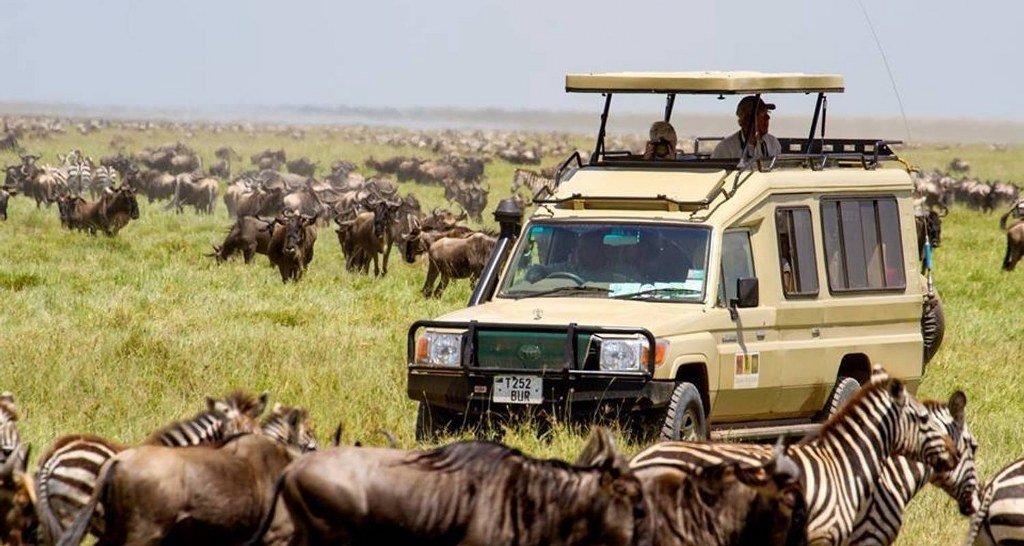
Your safari vehicle is your mobile home and your primary tool for wildlife viewing. For a budget Tanzania safari, this will typically be a customized 4×4 Land Cruiser or Land Rover, equipped with pop-up roofs for optimal game viewing and photography. The cost includes:
- Vehicle Hire: The daily rate for using a well-maintained safari vehicle.
- Professional Driver-Guide: An experienced guide is invaluable, possessing deep knowledge of animal behavior, tracking skills, and the best locations for sightings. Their salary and expertise are part of the cost.
- Fuel: Safari vehicles consume significant fuel covering vast distances within parks.
- Maintenance and Insurance: Ensuring the vehicle is in top condition for safety and reliability.
Tour operators like Top Guide Adventures often include these costs in a daily rate, which is then divided among the number of travelers in the group. This is why group safaris are generally more budget-friendly than private ones.
Typical Daily Costs for a Budget Tanzania Safari (2026-2027 Estimates)
To provide a clearer picture for your 2026 or 2027 safari planning, let’s break down the estimated daily expenditure for a budget traveler. Remember, these are averages and can fluctuate based on specific choices.
Estimated Daily Safari Budget Breakdown (Per Person)
| Cost Component | Estimated Range (USD) | Notes |
|---|---|---|
| Park Entrance Fees | $50 – $80 | Varies by park (Serengeti/Ngorongoro are highest) |
| Accommodation (Budget/Mid-Range Lodge/Camp) | $80 – $150 | Full board (B, L, D) |
| Vehicle, Guide & Fuel (Shared) | $70 – $100 | Based on 4-6 people per vehicle |
| Meals (if not included in lodge) / Bottled Water | $10 – $20 | Snacks, extra water |
| Daily Total Estimate | $210 – $350 | This is the core safari cost per day. |
Note: These figures are for the safari portion only and exclude international flights, visas, tips, personal expenses, and pre/post-safari accommodation.
This daily estimate is crucial for understanding the baseline cost. For instance, a 5-day budget safari would likely cost between $1050 and $1750 per person for the safari itself, excluding extras. Planning for 2026 or 2027 means factoring in potential small annual price increases for park fees and services.
Factors Influencing Your Budget Tanzania Safari Cost
While the daily breakdown provides a good estimate, several factors can significantly impact the final price of your budget Tanzania safari. Being aware of these allows you to make informed choices:
1. Duration of the Safari
The longer your safari, the higher the total cost, even if the daily rate remains the same. However, longer safaris can sometimes offer a slightly better per-day value as fixed costs (like vehicle hire for the entire trip) are spread over more days. A common budget safari duration is 5-7 days, covering the Northern Circuit’s highlights.
- Shorter Safaris (3-4 days): More affordable overall but offer a limited experience.
- Standard Safaris (5-7 days): Offer a good balance of experience and cost, typically covering Tarangire, Lake Manyara, and Ngorongoro Crater, with a taste of Serengeti.
- Extended Safaris (8-10+ days): Provide a more in-depth experience, potentially including more remote areas of the Serengeti or southern parks like Ruaha, but at a higher total cost.
For a budget-conscious trip in 2026 or 2027, a 5-day Northern Circuit safari is often the sweet spot.
2. Parks Visited
As noted, park fees vary. Including the Serengeti and Ngorongoro Crater, which are prime wildlife destinations, will increase your daily costs due to higher entrance and conservation fees. If budget is the absolute priority, focusing on parks like Tarangire, Lake Manyara, and perhaps adding a visit to Mto wa Mbu for cultural interaction can be more economical.
Higher Cost Parks:
- Serengeti National Park
- Ngorongoro Conservation Area
Moderate Cost Parks:
- Tarangire National Park
- Lake Manyara National Park
- Arusha National Park
A typical budget itinerary for 2026-2027 often includes a mix, balancing the desire to see iconic wildlife with cost management.
3. Type of Safari: Group vs. Private
This is one of the most significant factors affecting cost.
- Group Safaris: You join a small group (usually 4-6 people) in a shared safari vehicle. The costs for the vehicle, guide, and fuel are divided among the group, making this the most budget-friendly option. Top Guide Adventures offers scheduled group departures which are ideal for solo travelers or couples looking to save.
- Private Safaris: You have exclusive use of the safari vehicle and guide. This offers flexibility in your itinerary and pace but comes at a higher cost, as you bear the full vehicle and guide expenses. While more expensive, a private safari can sometimes be cost-effective for families or larger groups who can share the vehicle costs.
For a budget Tanzania safari in 2026 or 2027, choosing a group tour is highly recommended. You can find schedules and join group departures on our website: Tanzania Group Safaris.
4. Accommodation Choices
As detailed earlier, the type of lodge or camp chosen has a direct impact. Budget travelers typically opt for:
- Public Campsites: The cheapest option, offering basic facilities.
- Budget Tented Camps/Lodges: Comfortable, clean, with essential amenities.
- Mid-Range Lodges: A step up in comfort and services, sometimes accessible for budget travelers on shorter trips or by strategic booking.
Top Guide Adventures carefully selects partners that provide good value and comfort within a budget framework. We ensure that even budget accommodations meet our standards for cleanliness and safety.
5. Time of Year (Seasonality)
While Tanzania has excellent wildlife viewing year-round, traveling during the shoulder or low seasons can offer cost savings. Peak season (the dry season, roughly June to October) is the most expensive due to high demand.
- Peak Season (June – October): Highest prices, best for clear skies and easier wildlife spotting.
- Shoulder Season (March – May, November – early December): Moderate prices, good wildlife viewing, though May can be rainy.
- Low Season (Late December – February): Can offer the best budget deals, with lush landscapes and baby animals (especially during calving season Jan/Feb), though short rains can occur.
For 2026-2027 planning, consider the shoulder seasons (e.g., March-May or November) for a good balance of weather, wildlife, and cost savings on your budget Tanzania safari.
6. Inclusions and Exclusions
Always check what is included in your safari package. A comprehensive budget safari package should ideally include:
- Park entrance fees
- Accommodation
- All meals (breakfast, lunch, dinner)
- 4×4 safari vehicle with pop-up roof
- Professional English-speaking driver-guide
- Bottled water during game drives
- All government taxes and levies
Common Exclusions:
- International flights
- Visa fees
- Travel insurance
- Tips for guide and crew
- Personal expenses (souvenirs, drinks, laundry)
- Optional activities (e.g., hot air balloon safari, walking safaris in specific areas)
- Pre and post-safari accommodation in Arusha/Kilimanjaro
Understanding these exclusions is vital for accurate budgeting for your 2026 or 2027 trip. Top Guide Adventures provides clear breakdowns of inclusions and exclusions in all our quotes.
Sample Budget Itinerary & Costing (Northern Circuit, 5 Days)
Let’s illustrate with a sample 5-day budget safari itinerary covering the popular Northern Circuit. This is a common choice for first-time visitors aiming for a budget-friendly experience in 2026 or 2027.
Sample 5-Day Budget Northern Circuit Safari
- Day 1: Arusha to Tarangire National Park
- Day 2: Tarangire to Serengeti National Park
- Day 3: Full Day Serengeti National Park
- Day 4: Serengeti to Ngorongoro Crater / Karatu
- Day 5: Ngorongoro Crater Game Drive & Departure to Arusha
Estimated Cost for this 5-Day Budget Safari (Group Tour, 2026-2027):
Based on the daily estimates and assuming a group tour with budget/mid-range accommodation:
- Daily Cost: $250 – $320 per person per day
- Total Safari Cost (5 days): $1250 – $1600 per person
This estimated cost typically includes:
- All park entrance fees and conservation fees for the duration.
- Accommodation in selected budget/mid-range lodges or tented camps (full board).
- Safari vehicle (4×4 Land Cruiser) and professional driver-guide.
- Fuel for the entire safari.
- Crater service fees.
- Bottled water on game drives.
Exclusions to budget for separately:
- International flights
- Tanzania Visa ($50-$100 depending on nationality)
- Tips for guide (budget approx. $20-$30 per day for the group)
- Personal expenses, travel insurance, vaccinations
- Optional activities like cultural visits or hot air balloon (expensive, ~$500+ pp)
- Accommodation before/after safari in Arusha
This sample costing helps visualize the investment required for a well-rounded budget Tanzania safari in 2026 or 2027.
How to Find the Best Value for Your Budget Tanzania Safari
Securing a fantastic budget safari in Tanzania for 2026 or 2027 is achievable with smart planning and choosing the right tour operator. Here are our top tips:
Tips for Maximizing Your Budget Safari Value
- Book in Advance: Especially for group departures in 2026 or 2027, booking 6-12 months ahead secures your spot and often better rates.
- Consider Group Tours: As mentioned, sharing costs significantly reduces the per-person price. Look for reputable operators offering scheduled group departures.
- Travel in Shoulder/Low Season: If your dates are flexible, aim for the months outside the peak dry season for potential discounts.
- Be Flexible with Accommodation: Opt for well-regarded budget lodges or tented camps. Ensure they are clean, safe, and have good reviews.
- Choose a Shorter Duration: If budget is extremely tight, a 3 or 4-day safari might be necessary, focusing on 1-2 key parks.
- Pack Smart: Avoid buying expensive safari gear last minute. Pack essentials like neutral-colored clothing, a good hat, and sunscreen.
- Compare Operator Inclusions: Don’t just compare prices. Compare what’s included. A slightly higher price might be justified if more is covered.
- Ask Questions: A good tour operator will be transparent about costs and what’s included. Use contact channels like WhatsApp +255616946642 or Email info@topguideadventures.com to clarify any doubts.
- Look for Established, Trusted Operators: Companies with good reviews on platforms like TripAdvisor (e.g., Top Guide Adventures reviews) often provide better value and service, even for budget options.
Budget vs. Mid-Range vs. Luxury Safaris: What’s the Difference?
To truly understand the budget Tanzania safari cost, it helps to see how it compares to other travel styles:
- Budget Safari ($200 – $350 pp/day): Focuses on value, using comfortable but simpler accommodations, group travel, and essential inclusions. Experience is prioritized over opulence.
- Mid-Range Safari ($350 – $550 pp/day): Offers a step up in accommodation quality (nicer lodges, more amenities), potentially more flexibility in vehicle choice (e.g., smaller group private safaris), and a broader range of included services.
- Luxury Safari ($600+ pp/day): Features high-end lodges and tented camps with premium services, private concessions, exclusive guiding, gourmet dining, and often higher-end safari vehicles.
The core wildlife viewing experience remains phenomenal across all tiers. The difference lies primarily in comfort, exclusivity, and amenities. For 2026-2027, a budget safari offers an incredible gateway to Tanzania’s wonders.
Are There Hidden Costs in Budget Safaris?
Reputable tour operators strive for transparency. However, understanding potential “hidden” costs is key to realistic budgeting:
- Tips: While not always mandatory, tipping guides and camp staff is customary and greatly appreciated. Budget around $20-$30 per person per day for your driver-guide and lodge staff for a group safari.
- Beverages: Most safaris include bottled water on game drives, but alcoholic drinks and sometimes soft drinks at lodges are extra.
- Optional Activities: Hot air balloon safaris are a spectacular but costly addition (around $500+ per person). Cultural visits or walking safaris may also incur small fees.
- Park Fee Increases: While operators aim to lock in prices, governments can adjust park fees. For 2026-2027 bookings made far in advance, confirm how potential fee changes are handled. Top Guide Adventures is committed to transparent pricing for your 2026-2027 safari.
- Single Supplements: If you’re traveling solo and not joining a group, you might pay a single supplement for accommodation, increasing the per-person cost.
Always clarify these points with your tour operator. Top Guide Adventures provides detailed itineraries and cost breakdowns to avoid surprises.
Budgeting for Pre and Post-Safari Arrangements
Your safari cost is only part of the equation. You’ll need to budget for:
- International Flights: Costs vary wildly based on origin, time of booking, and airline. Book these well in advance for 2026-2027.
- Visa: Check requirements and fees for your nationality.
- Accommodation in Arusha/Kilimanjaro: You’ll likely need 1-2 nights before and after your safari. Budget hotels can cost $50-$100 per night, while mid-range options are $100-$200.
- Airport Transfers: Getting to/from your Arusha hotel or Kilimanjaro International Airport (JRO).
- Travel Insurance: Essential for any international trip, covering medical emergencies, trip cancellations, etc.
Making a 2026-2027 Budget Tanzania Safari a Reality
Planning a budget Tanzania safari for 2026 or 2027 is an exciting prospect. The key is realistic expectations, thorough research, and partnering with a trusted tour operator like Top Guide Adventures. We specialize in creating unforgettable safari experiences that balance adventure with affordability.
By understanding the cost components, factors influencing price, and tips for value, you can confidently plan a trip that meets your budget without compromising on the magic of Tanzania. Whether you join one of our scheduled group departures or discuss a tailor-made budget itinerary, we are dedicated to providing personal attention and support for your African adventure.
Ready to plan your 2026 or 2027 budget Tanzania safari? Get in touch with our expert team today. We’re here to answer all your questions and help craft the perfect journey.
Contact us:
- WhatsApp: +255616946642
- Email: info@topguideadventures.com
- Website: Top Guide Adventures Tanzania
“,
“faq_schema”: [
{
“question”: “What is the average daily cost for a budget Tanzania safari in 2026-2027?”,
“answer”: “A budget Tanzania safari in 2026-2027 typically costs between $200 and $350 per person per day. This includes park fees, accommodation in budget/mid-range lodges or camps, meals, and a shared safari vehicle with a guide.”
},
{
“question”: “What are the main factors that influence the cost of a Tanzania safari?”,
“answer”: “The primary cost drivers include the duration of the safari, the specific national parks visited (Serengeti and Ngorongoro are more expensive), the type of accommodation chosen (budget camps vs. mid-range lodges), and whether you opt for a group tour or a private safari. Traveling during peak season also increases costs.”
},
{
“question”: “Is a group safari cheaper than a private safari in Tanzania?”,
“answer”: “Yes, group safaris are significantly cheaper than private safaris. In a group tour, the costs for the safari vehicle, fuel, and driver-guide are shared among all participants, reducing the per-person expense. Private safaris mean you bear the full cost of the vehicle and guide.”
},
{
“question”: “What is typically included in a budget Tanzania safari package?”,
“answer”: “A comprehensive budget safari package usually includes park entrance fees, accommodation (full board), meals, a 4×4 safari vehicle with a pop-up roof, a professional driver-guide, fuel, and bottled water during game drives. Always confirm specific inclusions with your tour operator.”
},
{
“question”: “What costs are usually NOT included in a budget safari quote?”,
“answer”: “Common exclusions are international flights, visa fees, travel insurance, tips for guides and staff, personal expenses (like souvenirs or extra drinks), and pre/post-safari accommodation in Arusha. Optional activities like hot air balloon safaris are also extra.”
},
{
“question”: “When is the best time to go on a budget Tanzania safari for lower costs?”,
“answer”: “To find lower costs for a budget Tanzania safari in 2026-2027, consider traveling during the shoulder seasons (March-May, November) or the low season (late December-February), avoiding the peak dry season (June-October). You might find better deals on accommodation and potentially some tour packages.”
},
{
“question”: “How much should I budget for tips on a Tanzania safari?”,
“answer”: “While not always mandatory, tipping your driver-guide and lodge staff is customary. For a group safari, a general guideline is to budget around $20-$30 per person per day for the guide, and a smaller amount for lodge staff, to be pooled among the group.”
},
{
“question”: “Can I visit Serengeti and Ngorongoro on a budget safari?”,
“answer”: “Yes, it is possible to visit the Serengeti and Ngorongoro Crater on a budget safari, but these parks have higher entrance fees, which will increase your daily cost. Operators often include them in standard 5-7 day Northern Circuit itineraries, balancing the cost with other parks.”
}
]
}
“`
Check Availability for How Much Does A Budget Tanzania Safari Cost? 2026-2027
Ready to compare dates, prices, and the best option for your group? Send the package name and travel month so the team can reply with a clear quote, availability, and what is included.
Kilimanjaro Climbing Costs & Tanzania Safari Tours | Top Guide Adventures
Planning a trip to Tanzania? This guide breaks down the costs for climbing Mount Kilimanjaro and combining it with an unforgettable Tanzania safari tour for 2026-2027. Learn about pricing...
View package detailsDiscount Tanzania Treks And Affordable Safari Packages In 2026-2027
Discover how to plan discount Tanzania treks and affordable safari packages for your 2026-2027 adventure. This comprehensive guide covers budget-friendly options for iconic destinations...
View package detailsBest Africa Backpacking Routes And Budget Safari Adventures 2026-2027
Best Africa Backpacking Routes and Budget Safari Adventures is explained with current 2026-2027 planning, price, itinerary and booking information.
View package details
Tanzania Safari Prices And Park Fees: Your Ultimate Guide 2026-2027
Planning a Tanzania safari involves understanding various costs, primarily driven by park entrance fees and the overall safari package. This guide breaks down typical Tanzania safari prices...
View package detailsUsajili Wa Simba / Dates: Football Tourism Tanzania & Safari Packages
Planning to experience 'Usajili wa Simba' in Tanzania during the 2026/2027 season? This guide covers the likely dates, what to expect, and how to combine this unique football event with...
View package detailsAfcon Tanzania Travel Guide, Safari Tours And Match Packages 2026-2027
AFCON 2027 Tanzania Travel Guide, Safari Tours and Match Packages is explained with current 2026-2027 planning, price, itinerary and booking information.
View package detailsRichest Man In Tanzania & Luxury Safari Experiences In 2026-2027
Explore the pinnacle of luxury safari experiences in Tanzania, from exclusive lodges to private game drives, and gain insight into the nation's wealthiest individuals. Top Guide Adventures...
View package detailsAfcon Tanzania Schedule And Safari Travel Packages By Top Guide Adventures
Discover the AFCON 2026 Tanzania schedule and explore tailored safari travel packages. Top Guide Adventures offers unique experiences combining football excitement with the wonders of...
View package detailsRichest African Artist : Their Favorite Safari Adventures In Tanzania
In 2026, the allure of Tanzania's vast wilderness continues to draw global attention, including from some of Africa's wealthiest artists. While exact personal preferences remain private...
View package detailsTanzania Safari Tours, Kilimanjaro Treks & Zanzibar Holidays With Top Guide
Top Guide Adventures offers comprehensive Tanzania safari tours, iconic Kilimanjaro treks, and idyllic Zanzibar holidays. Discover the best of East Africa with personalized itineraries...
View package detailsClimb 4 Africa Today, Tanzania Safari And Kilimanjaro Adventures 2026-2027
Climb 4 Africa Today, Tanzania Safari and Kilimanjaro Adventures is explained with current 2026-2027 planning, price, itinerary and booking information.
View package detailsHabari Za Azam Fc Leo Na Tanzania Safari Tours Kwa Mashabiki 2026-2027
Habari za Azam FC Leo na Tanzania Safari Tours kwa Mashabiki is explained with current 2026-2027 planning, price, itinerary and booking information.
View package detailsNo related package matches those filters. Clear one or more filters to see the other topic-matched options.



